Home

KILO Research
Project
High-voltage heaters for voltages above 1,000 volts

As part of the KILO research project, Webasto is collaborating with partners from academia and industry to develop a novel high-voltage heater for electric mobility. The state of Mecklenburg-Western Pomerania and the European Union are supporting the project consortium.


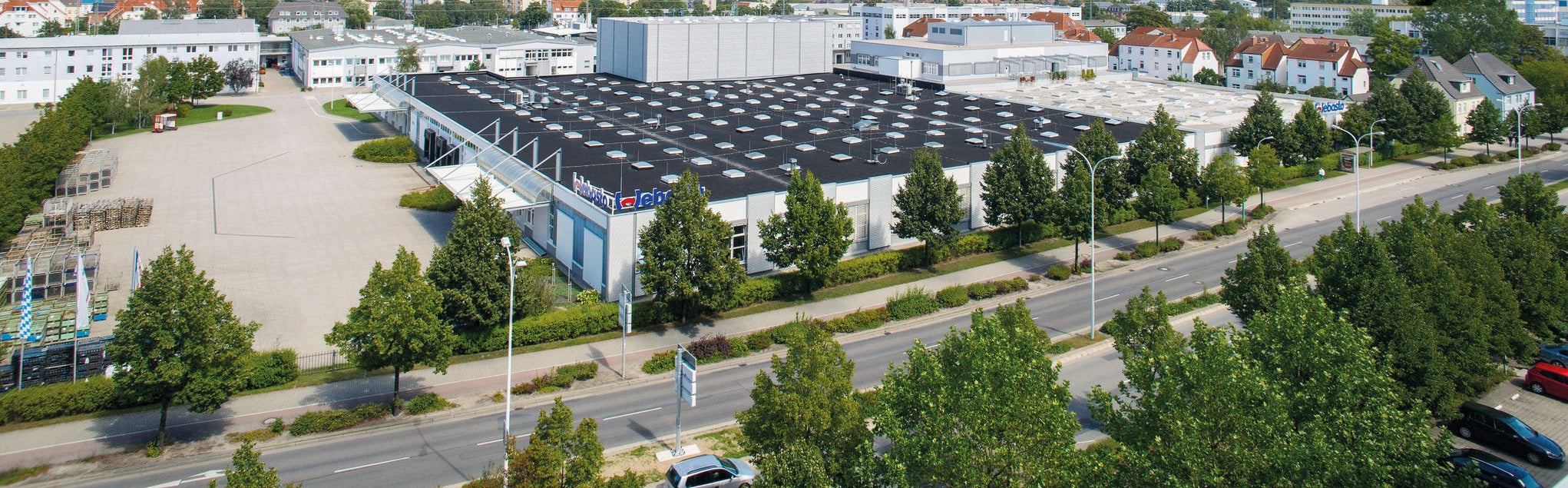
The goal of the project is to develop a modular high-voltage heater based on thick-film technology for voltages exceeding 1,000 volts. Webasto is developing the heater at its Neubrandenburg facility as part of the project consortium. It is intended primarily for use in electric vehicles and can be integrated into existing fluid circuits to heat the fluid directly.


As things stand today, the heating concept cannot be implemented using either thermal spraying or PTC technology. The development is therefore based on thick-film technology with printed heating conductor structures.

As the consortium leader, Webasto is responsible for the conceptual design of the entire unit and the development of the heating core application on carrier elements. In addition, Webasto is conducting experimental tests using functional prototypes.


The project consortium brings together industry and academia. In addition to Webasto, the Institute for Mobility Technology (IMTT) and automation & Software Günther Tausch GmbH from Neubrandenburg are participating. Other partners include the Fraunhofer Institute for Large Structures in Production Engineering IGP and the Welding Technology Training and Testing Institute SLV M-V GmbH in Rostock. The IMTT is researching new ceramic-based materials and joining technologies for high-voltage components.


KILO builds on decades of research collaboration at Webasto’s Neubrandenburg site in Mecklenburg-Western Pomerania. The site has already carried out joint research projects with Fraunhofer IGP, SLV, and other industry partners. Together with the IMTT, the goal is now to establish an industry-oriented research infrastructure in Neubrandenburg with the necessary personnel capacity.

Funding for the project consortium

The project will run from April 19, 2024, through December 31, 2027. The planned total budget is approximately 11.5 million euros. The Ministry of Economic Affairs of Mecklenburg-Western Pomerania is providing 7.3 million euros in funding for the consortium. This funding is based on the state guidelines for supporting business-oriented research, development, and innovation.

Co-funded by the European Union emblem in white outline for the KILO project reference story, signaling EU research funding and Webasto's system-partner role.

Other reference stories

  • Webasto powers electrical conversion of tractors in civil engineering sector

    Webasto as system partner powers the Agromec 700 Vario electric tractor conversion with certified battery packs and thermal management for emission‑free sites
    Agromec 700 Vario tractor with front-mounted zero-emission battery module demonstrating Webasto electrification systems as system partner for agricultural vehicles
  • LADOG and Webasto get electric mobility moving

    Webasto partners with LADOG to electrify municipal utility vehicles, delivering OEM battery systems and smart charging for efficient, flexible municipal fleets
    LADOG municipal utility vehicle with hydraulic front attachment and rear cargo box, highlighting Webasto electrification and thermal management for fleets.
  • Truck with pantograph from RWTH Aachen University

    Webasto as system partner supports RWTH Aachen’s electrified truck with pantograph and Webasto batteries for efficient overhead line charging and CO2 savings
    RWTH Aachen test truck with pantograph and Webasto electrification systems, demonstrating Webasto's system-partner capability for electric commercial vehicles.
  • Lohr relies on battery systems from Webasto

    Lohr Cristal electric shuttle uses Webasto battery systems, offering compact fast-charging battery solutions and system-partner expertise for urban mobility
    Cristal all-electric modular shuttle with Webasto Battery Management as system partner, showcasing scalable urban last-mile mobility and vehicle electrification.
  • Electrification of municipal vehicles

    Webasto as system partner powers the fully electric light truck eCarry by Green-G with battery and thermal systems for zero-emission urban municipal fleets
    Green-G eCarry electric light trucks in a city logistics setting, demonstrating Webasto as system partner for vehicle electrification and municipal fleet solutions.
  • Electric climber in steep terrain

    Webasto powers the Jeep Magneto with 70 kWh battery packs, VIB and thermal management, proving Webasto system partner for robust off‑road electrification
    Jeep Magneto electric concept in desert terrain highlighting Webasto as a system partner for vehicle electrification, battery integration and thermal management.
  • Supporting airport electrification with Goldhofer

    Webasto and Goldhofer drive airport electrification with the SHERPA E and modular battery systems, enabling emission-free airports with powerful electric tugs
    Electric Bison tow tractor on runway demonstrating Webasto vehicle electrification for ground support equipment and commercial mobility, as system partner.
  • Converting city buses into biomethane-electric hybrid vehicles

    Webasto system partner with CM Fluids converts city buses into carbon-neutral hybrid vehicles, pairing biomethane fuel range with compact Webasto batteries
    Übergabe eines Biogas‑Elektrobusses am Flughafen München als Webasto-Referenzprojekt zur Fahrzeug-Elektrifizierung und nachhaltigen Flughafentransportlösungen.
  • KILO Research Project

    As part of the KILO research project, Webasto is collaborating with partners from academia and industry to develop a new type of high-voltage heater for electric vehicles.
    Aerial overview of the Neubrandenburg site highlighting production halls, logistics and infrastructure to illustrate Webasto's role as a global systems partner