KILO Research
Project
High-voltage heaters for voltages above 1,000 volts
As part of the KILO research project, Webasto is collaborating with partners from academia and industry to develop a novel high-voltage heater for electric mobility. The state of Mecklenburg-Western Pomerania and the European Union are supporting the project consortium.
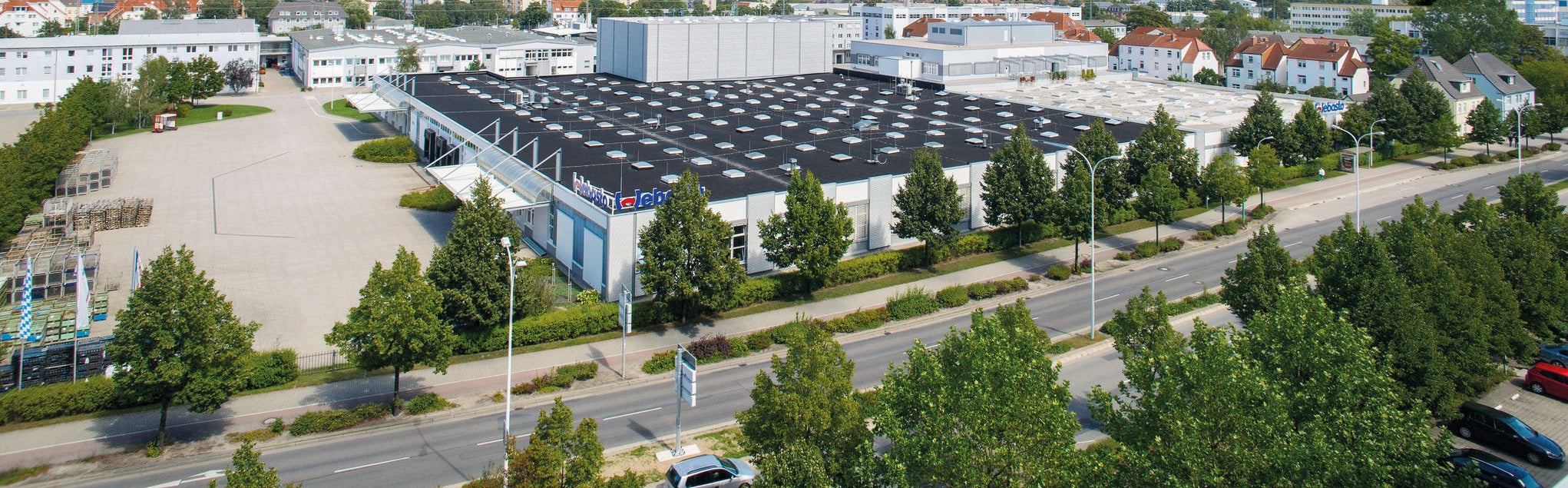
The goal of the project is to develop a modular high-voltage heater based on thick-film technology for voltages exceeding 1,000 volts. Webasto is developing the heater at its Neubrandenburg facility as part of the project consortium. It is intended primarily for use in electric vehicles and can be integrated into existing fluid circuits to heat the fluid directly.
As things stand today, the heating concept cannot be implemented using either thermal spraying or PTC technology. The development is therefore based on thick-film technology with printed heating conductor structures.

As the consortium leader, Webasto is responsible for the conceptual design of the entire unit and the development of the heating core application on carrier elements. In addition, Webasto is conducting experimental tests using functional prototypes.
The project consortium brings together industry and academia. In addition to Webasto, the Institute for Mobility Technology (IMTT) and automation & Software Günther Tausch GmbH from Neubrandenburg are participating. Other partners include the Fraunhofer Institute for Large Structures in Production Engineering IGP and the Welding Technology Training and Testing Institute SLV M-V GmbH in Rostock. The IMTT is researching new ceramic-based materials and joining technologies for high-voltage components.
KILO builds on decades of research collaboration at Webasto’s Neubrandenburg site in Mecklenburg-Western Pomerania. The site has already carried out joint research projects with Fraunhofer IGP, SLV, and other industry partners. Together with the IMTT, the goal is now to establish an industry-oriented research infrastructure in Neubrandenburg with the necessary personnel capacity.
Funding for the project consortium
The project will run from April 19, 2024, through December 31, 2027. The planned total budget is approximately 11.5 million euros. The Ministry of Economic Affairs of Mecklenburg-Western Pomerania is providing 7.3 million euros in funding for the consortium. This funding is based on the state guidelines for supporting business-oriented research, development, and innovation.